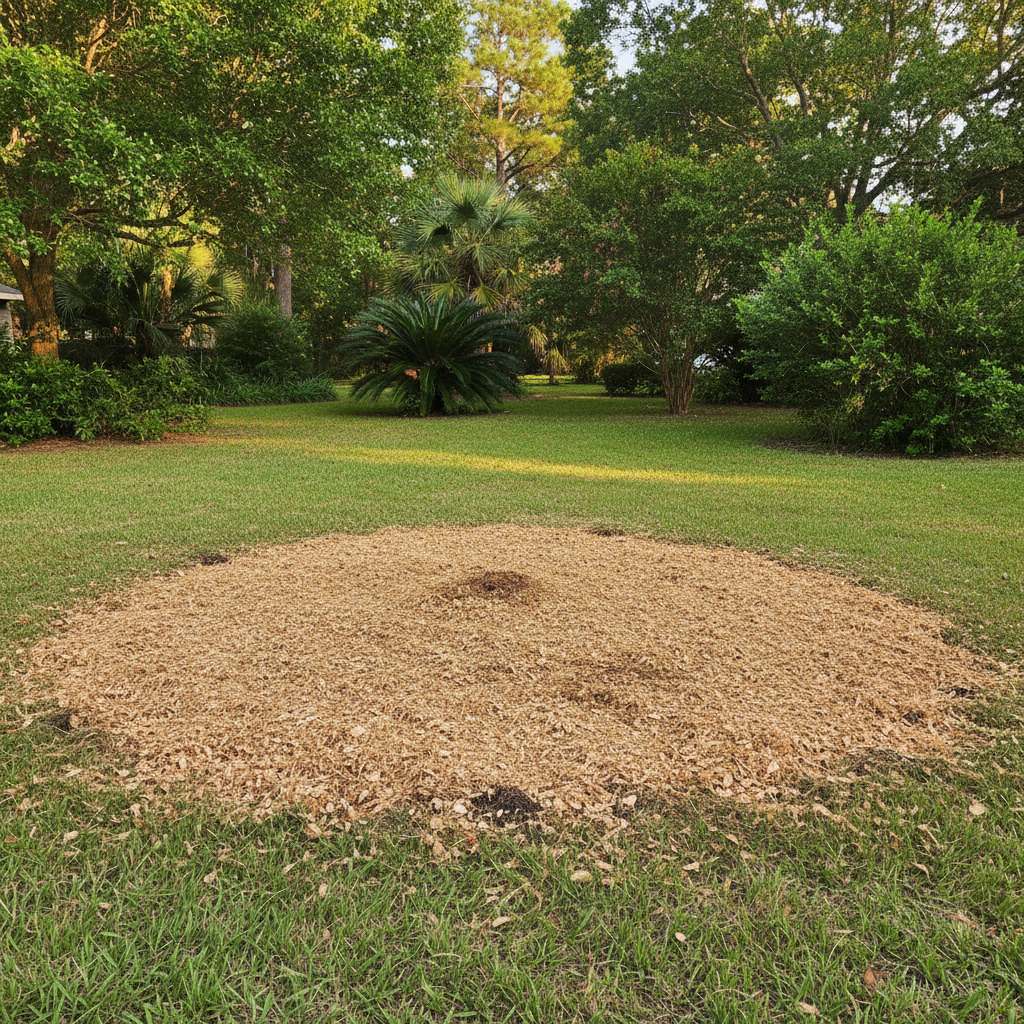
Alright, let's talk about tree stumps. You've had a tree taken out, maybe it was a storm casualty, or you just wanted more sunlight in your yard. Now you're stuck with that ugly, tripping hazard of a stump. It's not just an eyesore, you know; it's a magnet for pests and can even sprout new growth if you let it sit there. I get a lot of questions from folks around Lake Jackson about what to do with these things, so I figured I'd lay out the most common ones and give you the straight scoop.
Do I really need to remove that stump? Can't I just leave it?
You *can*, but honestly, I wouldn't recommend it. Leaving a stump in your yard is like putting out a welcome mat for termites, ants, and other critters you definitely don't want near your house. Plus, it's a tripping hazard, especially if you've got kids or grandkids running around. Mowing around it? That's a real pain, and frankly, it just looks bad. It'll rot over time, sure, but that can take years, and in our humid Lake Jackson climate, that rotting wood is prime real estate for fungi and pests. It can also cause headaches with new landscaping or construction if you decide to do something else with that spot later on.
What's the difference between stump grinding and stump removal?
This is a big one, and people often use the terms interchangeably, but they're not the same thing at all. Stump grinding is what most homeowners actually need and want. We use a powerful machine with a rotating cutting wheel that grinds the stump down into wood chips, usually 6 to 12 inches below ground level. This gets rid of the visible part of the stump and enough of the root crown so you can plant grass, lay sod, or even put in a new flower bed right over it. The roots that extend further out into the yard are left to decay naturally, which they'll do over time without causing any issues.
Stump removal, on the other hand, means digging out the entire root system. This is a much more invasive process, often requiring heavy machinery, and it leaves a much bigger hole in your yard. It's usually only necessary if you're planning major construction, like putting in a foundation or a swimming pool, exactly where the tree was. For most residential situations, grinding is the way to go — it's less disruptive, quicker, and more cost-effective.
How deep do you grind the stump?
Typically, we grind stumps anywhere from 6 to 12 inches below the existing ground level. For most folks, 6-8 inches is plenty to allow for new grass or landscaping. If you're planning to put in a patio, pour concrete, or do something else that requires deeper clearance, just let us know. We can usually go deeper, up to about 18 inches, depending on the size and type of stump. We'll always talk through your plans for the area so we can make sure we grind it to the right depth for your needs.
What happens to the wood chips and debris?
When we grind a stump, it creates a pile of wood chips mixed with some soil. You've got a few options here. We can leave the chips for you to use as mulch in your garden beds — they're great for suppressing weeds and retaining moisture. Or, if you don't want them, All Things Tree Company can haul them away for an additional charge. Most people opt to keep them if they have a use for mulch, but it's totally up to you. We'll always clean up the immediate area, making sure it looks tidy when we leave.
Can I plant a new tree in the same spot after grinding?
You can, but it's not always the best idea right away. The wood chips and remaining root fragments will decompose over time, which can create air pockets and nutrient imbalances in the soil. If you plant a new tree directly into that fresh grind site, it might struggle a bit. I usually recommend waiting at least a year, or planting a new tree a few feet away from the original stump location. If you absolutely have to plant in the same spot, we can remove more of the chips and backfill with fresh topsoil to give your new tree a better start.
How long does stump grinding take?
Most residential stump grinding jobs don't take very long at all. For an average-sized stump, say 18-24 inches in diameter, we're usually in and out in an hour or two. Larger stumps, or multiple stumps, will obviously take more time. Access to the stump can also play a role; if it's in a tight spot in your backyard, like some of those older homes in the Lake Jackson Farms area, it might take a bit longer to maneuver the equipment. We'll give you a time estimate when we come out for the quote.
Look, getting rid of a stump isn't rocket science, but it's a job best left to the pros with the right equipment. It's safer, faster, and you'll get a much better result. If you've got a stump that's bugging you, don't hesitate to give us a call. We're here to help you get your yard looking its best.